


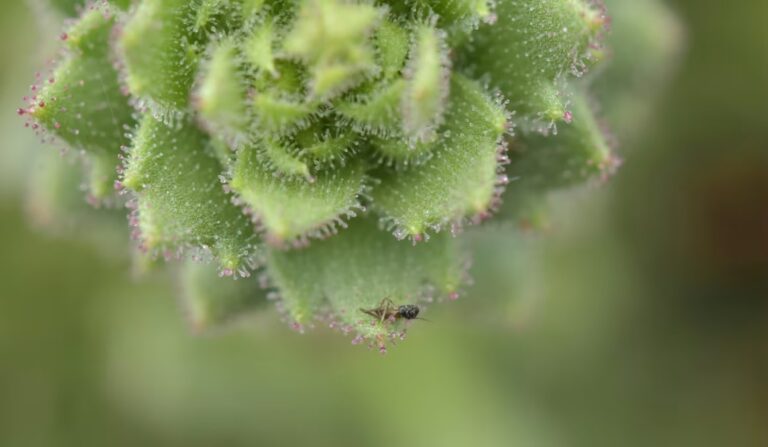
More than 150 years after Charles Darwin first proposed that certain members of the Saxifraga genus could be carnivorous, scientists have finally confirmed his remarkable prediction. Researchers have identified Saxifraga candelabrum, a flowering plant native to China, as an insect-eating species, adding another milestone to Darwin’s extraordinary scientific legacy.
The discovery demonstrates how a hypothesis made in the 19th century has now been validated using modern scientific techniques, underscoring the enduring value of Darwin’s observations and the continuous evolution of botanical research.
Darwin’s Prediction Finally Proven Correct
Charles Darwin, widely regarded as the father of evolutionary biology, had long been fascinated by carnivorous plants. While studying species with sticky glandular hairs, he suggested that some members of the Saxifraga genus might also derive nutrients from insects. However, during his lifetime, there was no experimental evidence to support this idea.
More than a century later, scientists have confirmed that Saxifraga candelabrum actively captures insects using sticky glandular hairs covering its flowering stems. Once trapped, the insects are broken down, allowing the plant to absorb valuable nutrients—particularly nitrogen and phosphorus—from their bodies.
This process officially classifies Saxifraga candelabrum as a carnivorous plant.
How the Plant Captures Its Prey
Unlike famous carnivorous plants such as the Venus flytrap, Saxifraga candelabrum relies on a passive trapping mechanism.
The plant is covered with sticky glandular hairs that act like natural glue. Small insects landing on the stems become stuck and eventually die. The plant then secretes digestive enzymes that break down the prey, enabling it to absorb essential nutrients that help it survive in nutrient-poor environments.
Researchers believe this nutritional strategy gives the species an important evolutionary advantage in habitats where soil fertility is limited.
Another Prediction by Darwin Vindicated
The discovery is not the first time Charles Darwin’s scientific foresight has been proven correct decades after his death.
In 1862, while examining the Madagascar orchid Angraecum sesquipedale, Darwin noticed its exceptionally long nectar tube measuring approximately 30 centimeters (11.8 inches). He predicted that the orchid could only be pollinated by an equally extraordinary moth possessing an unusually long feeding tube, or proboscis.
At the time, no such insect had been observed, and many scientists questioned Darwin’s conclusion.
Darwin passed away in 1882 without seeing his prediction confirmed.
In 1903, however, researchers discovered the giant Madagascar hawk moth with a 12-inch straw-like proboscis, perfectly matching Darwin’s prediction. The species, now classified as Xanthopan praedicta following a 2021 taxonomic revision, remains one of the most celebrated examples of predictive science in biology.
A Testament to Long-Term Scientific Research
Lead researcher Sun described the new discovery as evidence that scientific progress is built across generations.
According to the research team, continuing investigations inspired by Darwin’s original work illustrates that science is an ongoing relay, where each generation expands upon the discoveries of those before it.
The researchers emphasized that the confirmation of Saxifraga candelabrum’s carnivorous nature reflects the enduring importance of fundamental research in understanding plant evolution.
Plants Still Hold Many Secrets
Botanist Myers, commenting on the findings, noted that the discovery serves as a reminder of how much remains unknown about Earth’s plant diversity.
Despite centuries of botanical exploration, scientists continue to uncover unexpected adaptations and evolutionary strategies among plants. Identifying Saxifraga candelabrum as carnivorous demonstrates that even familiar plant groups can still surprise researchers.
As Myers observed, humanity is “still barely scratching the surface of botanical knowledge.”
Why This Discovery Matters
The confirmation of Saxifraga candelabrum as a carnivorous plant is significant for several reasons:
- It validates a scientific prediction made by Charles Darwin over 150 years ago.
- It expands the known diversity of carnivorous plants and their evolutionary adaptations.
- It provides new insights into how plants survive in nutrient-deficient environments.
- It reinforces the importance of long-term scientific research and observation.
- It highlights that many botanical mysteries remain unsolved, even in well-studied plant families.