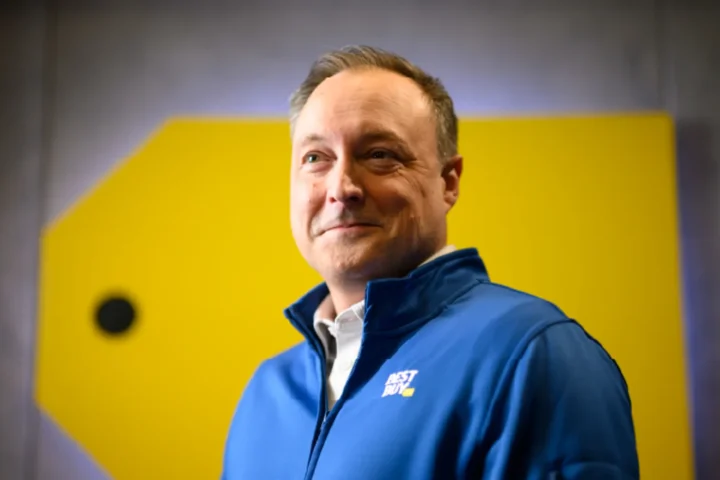

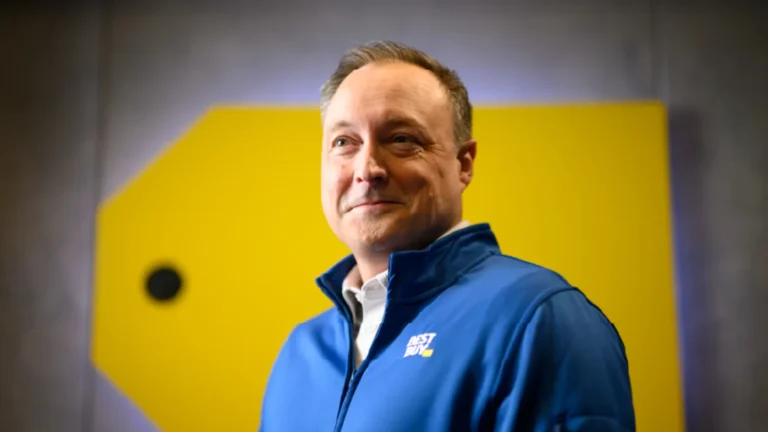
Best Buy is entering a pivotal phase in its evolution as incoming Chief Executive Officer Jason Bonfig prepares to take over from Corie Barry later this year. With the consumer electronics retailer facing several years of sluggish sales and changing market dynamics, Bonfig is positioning the company for sustainable long-term growth by expanding its physical footprint, strengthening customer engagement, and integrating artificial intelligence across the business.
In an exclusive interview with CNBC, Bonfig said his vision for Best Buy rests on four strategic priorities: advancing the company as both a retailer and technology leader, expanding its reach into new markets, enhancing the customer experience, and reinforcing a human-powered culture supported by AI.
Expanding Reach Through Smaller Stores
A cornerstone of Bonfig’s strategy is the rollout of small-format Best Buy stores, allowing the retailer to enter communities that cannot economically support its traditional large-box locations.
While most medium-format Best Buy stores measure between 20,000 and 25,000 square feet, the new stores range from approximately 12,000 to 15,000 square feet. The company’s flagship locations, such as its New York City store, exceed 40,000 square feet.
According to Bonfig, these smaller locations allow Best Buy to establish a presence in promising markets that were previously inaccessible due to space and cost constraints.
The company recently opened two new stores that reflect this strategy:
- Jonesboro, Arkansas – A return to the city after its previous store was destroyed by a tornado. The new location, approximately 18,000 square feet, is designed to serve the community while offering Best Buy’s core product categories.
- Cape Cod, Massachusetts – A 28,000-square-foot location tailored to the region’s market needs, demonstrating that store size will vary depending on local demand rather than following a fixed template.
Bonfig emphasized that these smaller stores are not replacing traditional Best Buy outlets but are expanding the company’s overall market reach.
He also highlighted that customers living closer to a Best Buy store not only visit more frequently but also become more engaged with the company’s digital ecosystem, including its mobile app and online shopping platforms. The physical presence, he said, strengthens both in-store and online customer behavior.
Best Buy Canada has already demonstrated the effectiveness of this approach, operating successful stores as small as 7,000 square feet, providing valuable insights that influenced the U.S. expansion strategy.
Navigating Challenging Market Conditions
Best Buy’s transformation comes after several difficult years for the consumer electronics industry.
Since reaching record highs in late 2021, the company’s stock has fallen by roughly 20%, reflecting weaker consumer demand following the pandemic boom.
The retailer has attributed its recent performance to several factors:
- Reduced consumer confidence
- Slower housing market activity
- Fewer breakthrough technology innovations
- Higher costs driven by tariffs
- Rising prices for memory chips and electronic components
During the COVID-19 pandemic, consumers accelerated purchases of televisions, computers, appliances, and home electronics, creating an unusually strong demand cycle. Bonfig believes that surge effectively reset the technology replacement cycle, leading to several years of softer demand afterward.
Rather than viewing this period as a loss of momentum, Bonfig described it as an industry-wide normalization following unprecedented pandemic-driven growth.
Reinventing the Customer Experience
Improving customer experience remains another major priority under Bonfig’s leadership.
He plans to enhance in-store product presentations, particularly in premium television categories, while making it easier for customers to upgrade and replace existing devices.
Bonfig said the ultimate measure of his success as CEO will be customer satisfaction rather than short-term financial metrics alone.
Artificial Intelligence as a Growth Engine
Artificial intelligence is expected to play a significant role in Best Buy’s future strategy.
The company is investing in AI across multiple areas of its business, including:
- AI-powered customer shopping tools
- Partnerships with OpenAI and Google
- Support for emerging AI hardware such as Meta’s AI smart glasses
- Internal AI applications to improve business operations and efficiency
Bonfig noted that AI-driven shopping, often referred to as agentic commerce, is already changing how consumers discover and purchase products.
As customers increasingly rely on AI assistants and intelligent shopping platforms, Best Buy wants to ensure its products, services, and expertise remain easily accessible within those ecosystems.
However, Bonfig stressed that artificial intelligence is intended to enhance—not replace—the human expertise that has long differentiated Best Buy.
Building on an Established Foundation
Despite introducing new initiatives, Bonfig made it clear that his strategy represents continuity rather than a dramatic departure from the company’s existing direction.
He praised outgoing CEO Corie Barry’s leadership and said the next phase of Best Buy’s evolution builds directly on the progress already made.
“Corie had an amazing strategy, and my strategy is built on top of that. There is a tremendous amount of momentum.”
Rather than reinventing Best Buy, Bonfig aims to extend its reach, modernize the shopping experience, embrace emerging technologies, and position the retailer for sustainable growth in an increasingly digital and AI-driven retail landscape.