
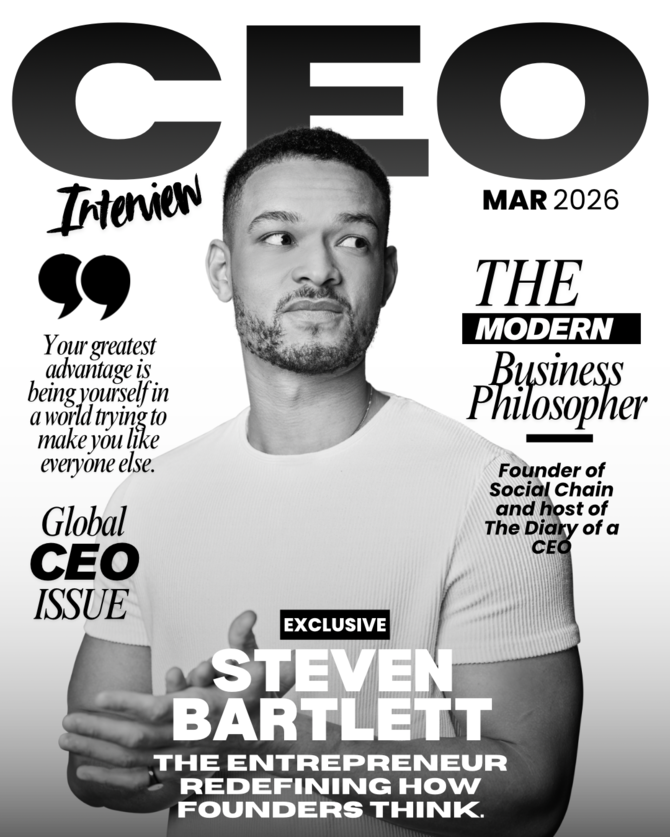

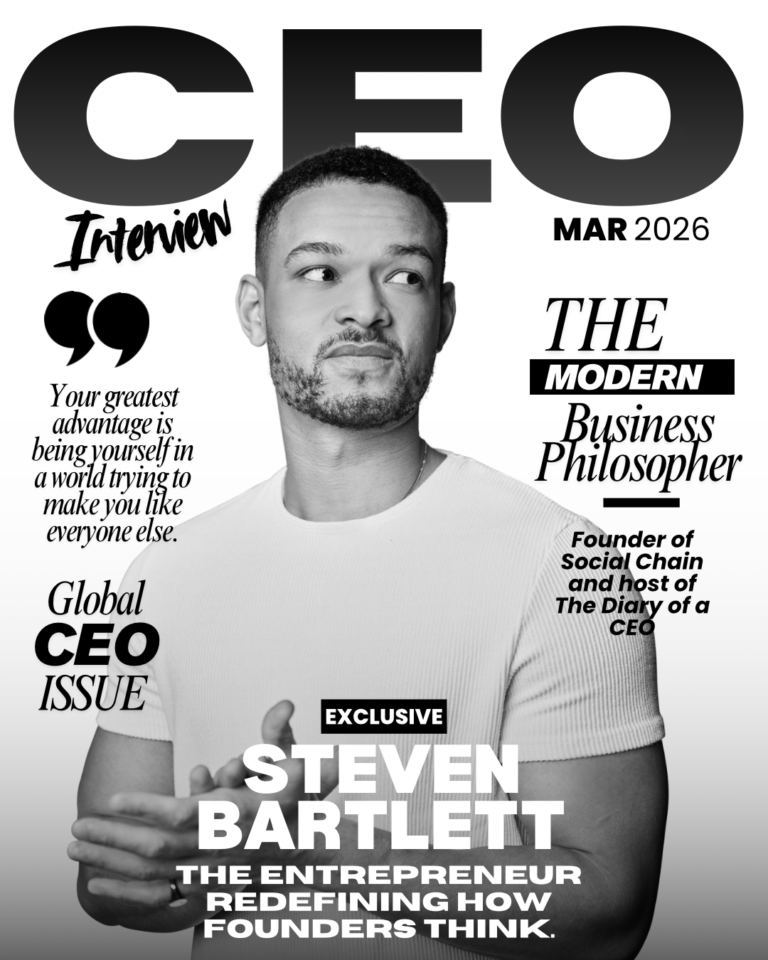
In an era where entrepreneurship has become synonymous with innovation, influence, and storytelling, few figures have emerged as compellingly as Steven Bartlett. Known globally as the host of The Diary of a CEO and as a prominent investor on Dragons’ Den, Bartlett has become one of the most recognizable voices shaping the modern business conversation.
Born in Botswana and raised in Plymouth in the United Kingdom, his journey reflects the power of unconventional paths. Expelled from school at an early age and later leaving university after attending only a single lecture, Bartlett chose a route that many would consider uncertain. Yet that decision became the starting point for one of the most remarkable entrepreneurial journeys of the digital age.

Over the years, Bartlett has built and exited companies, founded global ventures, invested in groundbreaking startups, and created one of the most influential business podcasts in the world. More importantly, he has transformed the way entrepreneurs communicate their experiences. Rather than portraying success as effortless, Bartlett speaks openly about failure, vulnerability, and the psychological realities behind ambition.
Today, he stands at the intersection of entrepreneurship, media, and technology, inspiring millions of founders, creators, and dreamers around the world.
In this exclusive feature, Business Review Magazine explores Steven Bartlett’s story through an in-depth interview format, uncovering the mindset, philosophy, and vision behind one of the most influential entrepreneurs of his generation.

Exclusive Interview with Steven Bartlett
Q1. Steven, your journey from dropping out of university to becoming one of the most influential voices in business is extraordinary. How did the journey truly begin?
Steven Bartlett:
The journey really began with curiosity and a sense of restlessness. Growing up, I always felt slightly out of place within traditional systems. School didn’t inspire me in the way it seemed to inspire others. I struggled with the structure, and I often felt that the things I wanted to learn weren’t being taught in the classroom.
When I enrolled at university, that feeling intensified. After attending my first lecture, I realized that the path in front of me didn’t align with the future I imagined. Instead of seeing opportunity, I saw limitation. That realization pushed me to leave university almost immediately and commit fully to entrepreneurship.
At the time, I had no guarantee that things would work out. What I did have was an intense curiosity about the internet, social media, and the power of digital communities. I believed that the internet was creating a new kind of economy where creativity and attention would become powerful currencies.
That belief became the foundation for everything that followed.
Q2. Your company Social Chain became one of the fastest growing marketing companies in Europe. What made the idea so powerful at that time?
Steven Bartlett:
When we started Social Chain, social media was already growing rapidly, but many brands still didn’t understand how it truly worked. Traditional advertising agencies were trying to adapt old strategies to new platforms, and that approach simply wasn’t effective.
Our insight was simple. Social media had its own culture, language, and rhythm. If brands wanted to connect with audiences, they needed to become part of that culture rather than interrupt it.
We built Social Chain around this principle. Instead of treating social media as another advertising channel, we treated it as a living ecosystem where content needed to feel native, authentic, and engaging.
That philosophy helped the company grow extremely quickly. Within just a few years, Social Chain expanded internationally and eventually became part of a publicly listed company valued in the hundreds of millions.
But beyond the financial success, the experience taught me something incredibly important: timing matters. When you build a business that aligns with a fundamental shift in the world, momentum begins to work in your favor.
Q3. You eventually stepped away from Social Chain despite its success. What motivated that decision?
Steven Bartlett:
Entrepreneurship is not only about building companies. It’s also about evolving as a person.
When Social Chain began, I was driven by the excitement of creating something new and disrupting an industry. But as the company matured and became larger and more structured, I realized that my personal interests were changing.
I became increasingly fascinated by storytelling, media, and the psychology behind success. I wanted to explore conversations about ambition, failure, leadership, and human behavior in a deeper way.
Leaving Social Chain wasn’t a rejection of what we had built. It was an acknowledgment that my purpose was shifting. Sometimes the most courageous decision an entrepreneur can make is recognizing when it is time to move toward the next chapter.
Q4. Your podcast The Diary of a CEO has become one of the most successful business podcasts globally. What inspired you to start it?
Steven Bartlett:
The idea was actually born from something very personal.
For many years, I kept a diary where I wrote about the challenges I faced as an entrepreneur. Those entries weren’t polished or inspirational. They were honest reflections about fear, uncertainty, and the pressure that comes with building companies.
At some point I realized that many entrepreneurs were experiencing the same emotions but rarely talked about them publicly. There was a gap between the reality of entrepreneurship and the way it was often portrayed.
So I decided to create a podcast that would bridge that gap.
The goal was simple. Instead of presenting success as a perfect story, I wanted to have honest conversations with remarkable individuals about their struggles, lessons, and turning points.
Over time, those conversations resonated with millions of listeners around the world. I believe the reason is simple: people connect with authenticity.
Q5. Your interviews frequently explore topics such as psychology, resilience, and personal growth. Why do these themes matter to you?
Steven Bartlett:
Because business is ultimately about people.
Many entrepreneurs focus on tactics and strategies. They want to know the exact steps required to build a successful company. But in reality, the most important factor in entrepreneurship is mindset.
How you think determines how you act. How you respond to failure determines how far you will go.
Psychology influences everything from leadership and decision-making to marketing and innovation. If you understand human behavior, you gain a much deeper understanding of how businesses grow and how ideas spread.
That is why I enjoy conversations that go beyond surface-level success stories. I want to understand the emotional and psychological foundations behind great achievements.
Q6. Becoming the youngest investor on Dragons’ Den was a major milestone. What did that experience mean to you?
Steven Bartlett:
It felt like a full circle moment.
Growing up in the United Kingdom, Dragons’ Den was one of the few mainstream television shows that celebrated entrepreneurship. Watching the show as a young person, I remember imagining what it might feel like to sit in those chairs and evaluate business ideas.
Years later, when I was invited to join the panel as the youngest investor in the show’s history, it was both exciting and humbling.
What I enjoy most about the experience is meeting founders at the very beginning of their journeys. Their energy and passion remind me of the early days of my own entrepreneurial path.
Supporting those founders and helping them transform their ideas into real businesses is incredibly rewarding.
Q7. You have also launched new ventures such as Flight Story and technology companies in the Web3 space. What is the broader vision behind these initiatives?
Steven Bartlett:
My broader vision revolves around the intersection of media, technology, and entrepreneurship.
The internet has fundamentally changed how influence works. In the past, media companies controlled distribution. Today, creators and entrepreneurs have the ability to build their own platforms and communities.
Through ventures like Flight Story, my goal is to support creators and founders who are shaping the future of media and digital entrepreneurship.
At the same time, emerging technologies are opening new opportunities for innovation. The world is evolving rapidly, and I want to build companies that empower people to participate in that transformation.
Ultimately, I see entrepreneurship as a powerful tool for solving problems and creating impact at scale.
Q8. Millions of young entrepreneurs look up to you. What advice would you offer to the next generation of founders?
Steven Bartlett:
The first piece of advice I would offer is this: success is rarely as linear as it appears from the outside.
When you look at someone’s achievements, it’s easy to assume their journey was smooth. But behind every successful entrepreneur are countless moments of doubt, failure, and uncertainty.
Second, cultivate the ability to learn quickly. The world is changing faster than ever before. The most valuable skill you can develop is the ability to adapt, absorb information, and evolve.
Finally, build something that genuinely matters to you. Entrepreneurship is a long and demanding journey. If your motivation is purely financial, you may struggle to sustain the energy required.
But if you are driven by curiosity, purpose, and the desire to create something meaningful, the journey becomes far more fulfilling.
A New Era of Entrepreneurship
Steven Bartlett represents a new archetype of the modern entrepreneur. Rather than focusing solely on building companies, he has built influence, conversations, and platforms that shape how millions of people think about ambition and success.
Through his podcast, investments, and ventures, Bartlett has helped redefine what leadership looks like in the digital age. His willingness to speak openly about vulnerability and personal growth has made entrepreneurship feel more human and accessible.

As the worlds of media, technology, and entrepreneurship continue to merge, Bartlett stands as one of the most compelling voices guiding the next generation of founders.
His story reminds us that the future of business will not only be shaped by innovation and strategy, but also by authenticity, curiosity, and the courage to question conventional paths.